Staying the Course: Reflections on Vulnerability and Academic Life
I remember every moment of the time I cried during a lecture I gave. More precisely, during the discussion that followed, which somehow felt worse. I remember the tears slowly gathering, and the instant when they broke through my eyelids despite my determined effort to contain them. I remember the embarrassment of crying in that moment; of not managing to hold it together long enough to escape to the restroom during the break and silently weep there. It was probably the most publicly vulnerable moment of my academic career thus far.
Until then, my low points had been private ones: rejection letters, harsh peer reviews, unfunded grants. But this moment was public. And in itself, it was not extraordinary. The questions were sharp but fair, and I had handled such exchanges before. What made the difference was that the talk took place during a prolonged period of setbacks, refusals, and disappointments, a stretch in which I was no longer sure whether or how I would recover. The discussion that day was simply the final straw.
Returning to the workshop after that incident was not self-evident. Everyone would remember me there by that incident. Why not quietly withdraw from the workshop and move on? Yet I realized that choosing an academic career means accepting that vulnerability is part of the path. With the support of a few participants in that workshop and several close colleagues and friends, I decided not to retreat. I returned. I stood up straight, lifted my chin up, and kept going. That moment remains embarrassing, but it also fuels me to show that this incident does not reflect all of my academic being, that I have something to say.
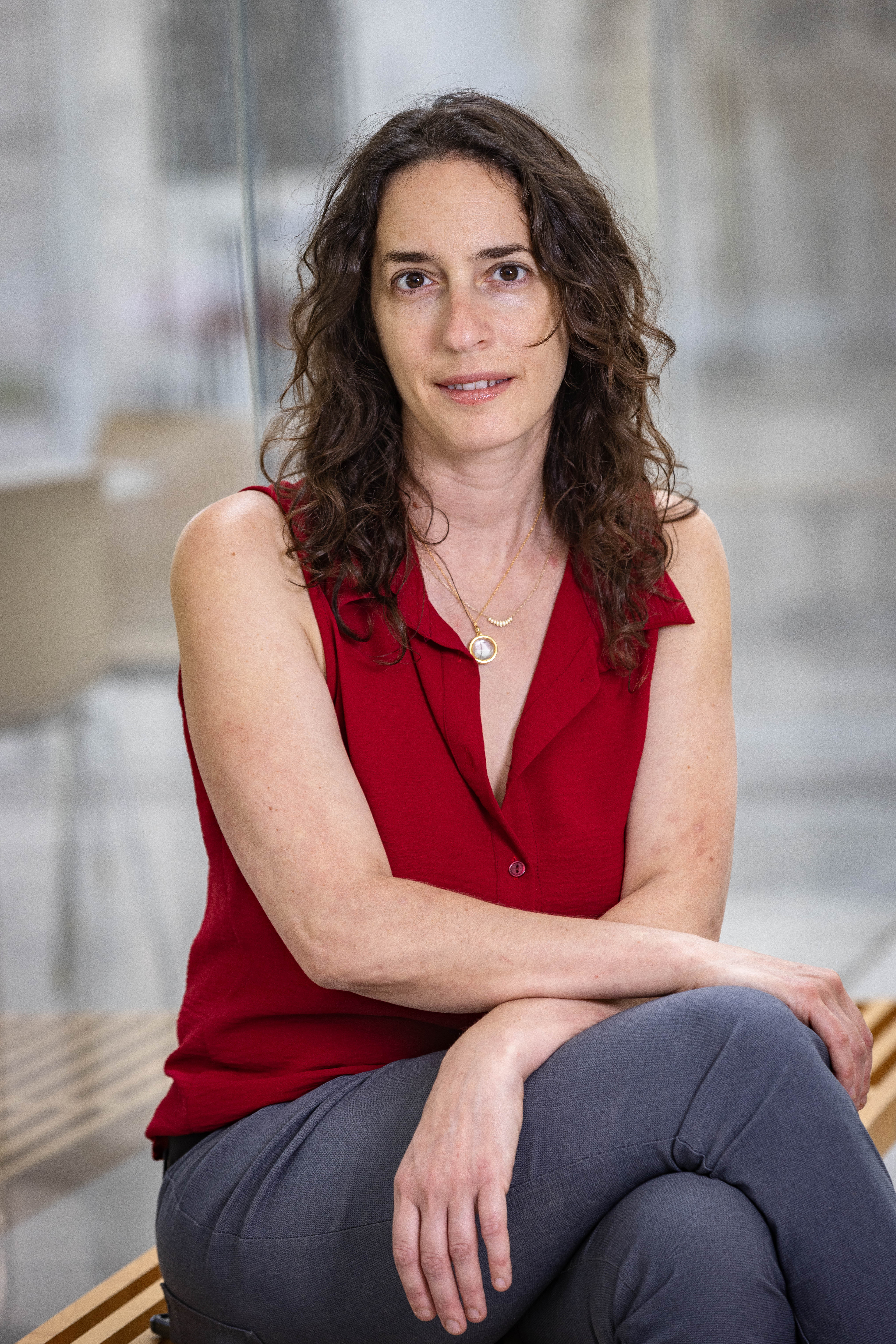
I begin this text here, from vulnerability and difficulty, from the determination required by this profession and from the solidarity that sustains it. Academic life brings joy and fulfillment, but these are inseparable from such moments of exposure and uncertainty. As I take up a tenured position in the Department of Sociology and Anthropology at the Hebrew University of Jerusalem, I want to offer a candid account of the road that led me here.
In my new role, I continue developing two interrelated research trajectories. The first, Glocalizing QALYs, is an ethnographic study of the ethical, cultural, and political assumptions embedded in Quality-Adjusted Life Years (QALY), a central metric used globally in healthcare resource allocation. Although QALY is presented as a standardized and universal tool, its calculation rests on contested understandings of what constitutes a “good” life in good health, understandings that vary across cultural, historical, and political contexts. My research examines how health economists navigate the tension between producing a universalizable metric and remaining attentive to culturally specific notions of well-being.
In parallel, I collaborate on an interdisciplinary project exploring the cultural constitution of “bias” in experimental physics. This work investigates how researchers define, detect, and manage bias in large-scale, resource-intensive scientific projects where reliability and objectivity are central concerns. Together, these projects converge around a broader question that has shaped my work in recent years: How is scientific and professional authority produced, and which values and cultural assumptions shape what counts as credible knowledge?
Now, at this milestone in my career, I would like to offer a few reflections for those considering a future in academia or research more broadly. These insights emerge from my own experience as an anthropologist, but I hope they may resonate across disciplines and institutional contexts.
________________________________________
Part I: An Inner Compass
Why am I doing this?
The answer may shift over time, and sometimes it may feel unclear. But without some articulation of purpose, one risks drifting into a career by inertia. This question becomes your North Star. It helps you decide which opportunities to pursue and which to decline.
What is at stake?
Every research project must answer the question: why should anyone care? Ask yourself what makes your work worth sustained intellectual commitment. Often, the answer requires situating your project within broader conversations and articulating its contribution to a larger field.
________________________________________
Part II: Strategy and Tactics
Strategic planning.
What is your long-term goal? Do you aspire to an academic career? In which regions or institutional contexts? Strategic clarity allows you to align daily decisions with broader aims.
Tactical planning.
If you are pursuing academia, tactical decisions matter: doctoral training, mentorship, postdoctoral positioning, publication venues, collaborative versus single-authored work, and applications for competitive grants. Develop a multi-year plan. Track your manuscripts and grant proposals so that you always have projects in writing and others under review. Balance ambitious submissions to leading journals, where review processes may be lengthy, with strategically chosen venues that allow for steadier publication.
Move every deadline two weeks earlier.
A senior colleague once gave me this advice when I asked how she balanced parenting and research. Life brings unpredictability, illness, political upheaval, institutional crises. Building buffer time is not pessimism; it is realism.
Learn to say no.
As you advance, invitations multiply: panels, guest lectures, peer reviews, committees, conference organization. These are affirming and valuable. Yet saying yes too often can erode the time needed for sustained research.
Learn to say yes.
Equally important is recognizing when to accept opportunities that stretch you beyond your immediate comfort zone. Many scholars, especially women and scholars from underrepresented backgrounds, may hesitate to step into public or interdisciplinary spaces. Thoughtful risk-taking can shape a career.
________________________________________
Part III: Relationships and Community
Build a peer group.
A small circle of colleagues at a similar career stage can become one of your greatest resources. Reading or writing groups provide feedback, accountability, and mutual support.
It is not a competition.
You will inevitably apply for the same grants and positions as your peers. If you frame this solely as personal competition, frustration is inevitable. The deeper issue is structural scarcity. Your peers are not your adversaries; the structural conditions are. Solidarity makes the journey more bearable.
Cultivate an international community.
Even when geopolitical realities complicate international engagement, scholarly exchange across borders remains vital. Small workshops, summer schools, and specialized conferences can open enduring intellectual relationships. International networks expand conversations and, pragmatically, facilitate opportunities in publication and collaboration.
Find “big sisters” (or mentors).
Seek scholars slightly ahead of you who are not your supervisors but can offer informal guidance. These relationships, free of formal hierarchy, can be transformative.
________________________________________
Part IV: Staying the Course — Resilience, Creativity, Balance
Apologizing less.
During my doctoral studies, a faculty member once told me: “Stop apologizing in your speech and emails. Do not diminish your own work.” I had not even noticed I was doing it. Becoming attentive to habitual self-undermining language can shift how one is perceived—and how one perceives oneself.
Impostor syndrome.
The sense that one’s competence will soon be exposed as fraudulent is widespread in academia. It may never disappear entirely. The task is not to eradicate it, but to prevent it from silencing you. Collect external evidence of your accomplishments as reminders during difficult moments.
Celebrate, but stay grounded.
Academic life is full of rejection. When success comes, allow yourself to celebrate it. Some colleagues keep a folder of acceptance letters to revisit during discouraging times. At the same time, humility protects both oneself and one’s relationships.
Breathe under pressure.
Years of Iyengar yoga have taught me that sustained effort requires grounded posture and steady breath. Academic life is continuous exertion, often without clear boundaries between work and rest. The challenge is to sustain effort without losing one’s breath.
Protect creativity.
Research is an act of creation: forging connections where none previously existed. Creativity requires space. For me, that space comes through backpacking, conversation, and music. What looks like idleness may be essential incubation.
Life beyond academia.
While academic work often blurs into personal life, other dimensions, family, friendship, sport, activism, are not distractions but foundations for well-being and perspective. But most importantly, if you have woven other dimensions into your life, and they include long stretches outdoors, remember to wear sunscreen. 😉
________________________________________
As I begin this new chapter at the Hebrew University of Jerusalem, I look forward to teaching foundational courses, as well as seminars on medical anthropology, the politics and history of defining life “in good quality,” and the cultural conditions under which scientific knowledge becomes trustworthy or suspect. In this role, I must continually ask what it means to be a researcher, mentor, and teacher in our present moment. This question is complex and delicate, especially in times of social and political tension. Yet it is the responsibility of those in positions of education and leadership to engage it thoughtfully.
If you have reflections of your own on how to remain on this path with integrity and resilience, I would be glad to hear them.